- Open 24/7, Monday to Sunday
- 4175 + containers delivered
- Serving Hamilton County
Common project fits
Blue Ash dumpster rentals match the work
The right container depends on material, loading method, available space, and how long the property can spare the placement area. These are common Blue Ash applications, not rigid rules. A quick description of the debris usually prevents ordering more capacity than the job needs.
House Cleanout Dumpsters
A Blue Ash house cleanout may involve furniture, boxed belongings, and mixed household debris. We check driveway width and mature landscaping before setting a container near an established home.
Home contentsBasement and Garage Cleanouts
Basement and garage projects in Blue Ash often require a clear path from the house to the driveway. Keep steps, parked cars, and stored materials out of the loading route.
Storage areasRoofing Dumpsters
For a Blue Ash roofing job, the container should sit close enough for tear-off loading without blocking workers or delivery access. We discuss roof material, driveway surface, and truck approach.
Roof replacementRemodeling Debris Dumpsters
Kitchen, flooring, and room renovations around Blue Ash produce dense debris that can fill a container quickly. Separate unusually heavy material from general construction waste when describing the job.
Renovation debrisYard Waste Dumpsters
Blue Ash yard projects may generate branches, brush, soil, or storm cleanup material. Tell us what the crew will load because local disposal requirements can differ by material.
Outdoor cleanupMoving and Estate Cleanouts
Moving and estate cleanouts in Blue Ash benefit from a placement plan that keeps driveways usable while boxes, furniture, and household contents are sorted and loaded.
Move-out work
Blue Ash conditions
Blue Ash placement starts with the property
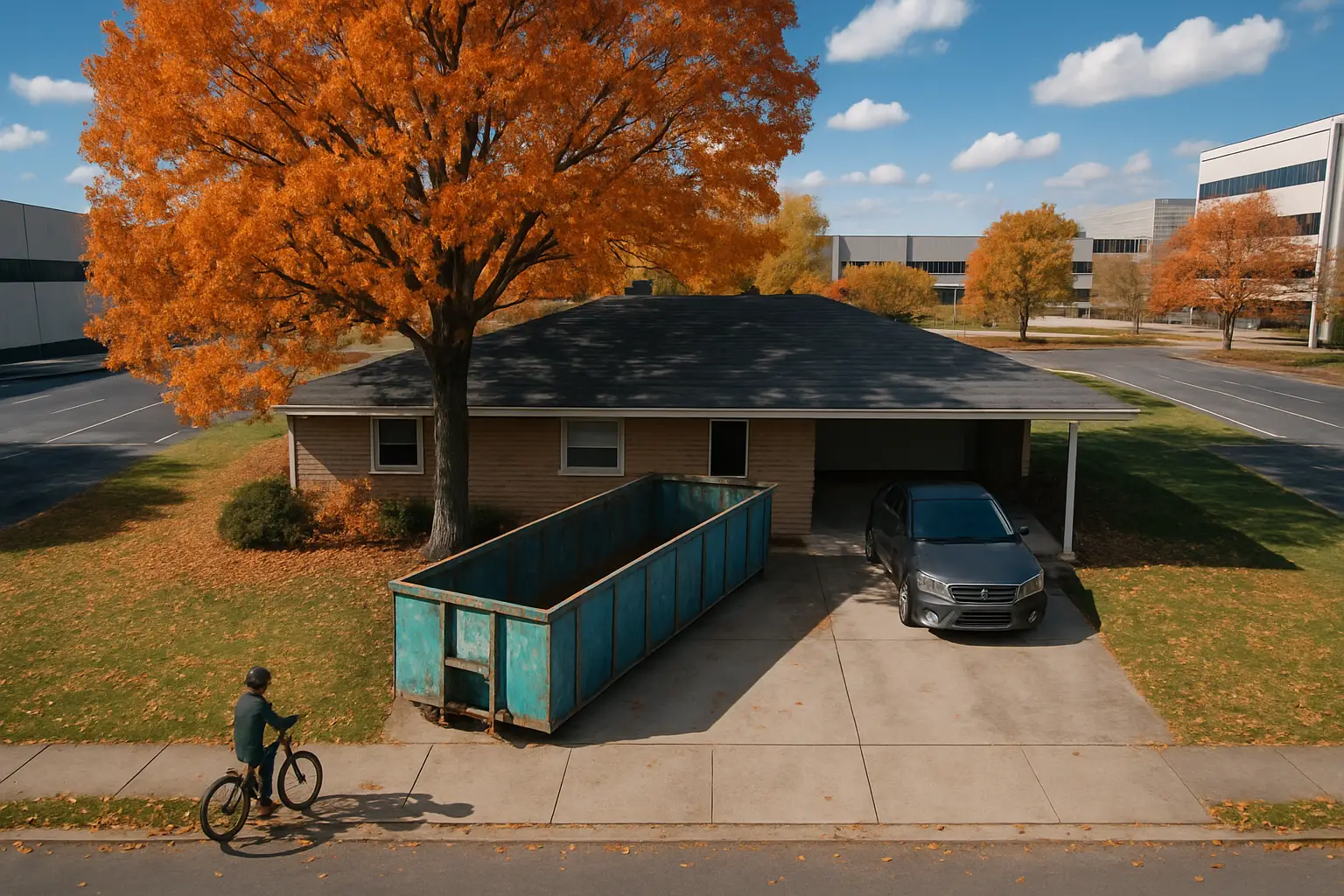
Blue Ash combines established residential streets with expanding office and commercial districts, so a container may sit beside an older driveway, a newer parking area, or an active redevelopment site. The available approach matters more than the address alone. We look for overhead branches, parked vehicles, narrow turns, soft shoulders, and pavement transitions before the truck arrives. A container that fits the debris may still be the wrong choice if the truck cannot line up safely. Describe the driveway, side yard, or work zone clearly so placement can be planned around the actual property.
Older homes near established residential sections may have narrower driveways and mature trees, while newer subdivisions often offer better access but tighter landscaping and planned parking. Blue Ash winter freeze and thaw can leave soil edges soft, especially after rain or snowmelt. During wet weather, placing heavy equipment on a grass strip can create avoidable damage. We can discuss protective boards and a firmer placement area before delivery. Keep the approach clear of low limbs, vehicles, trailers, and construction materials so the driver has room to position the container without unnecessary repositioning.
Corporate parks and suburban redevelopment sites bring a different scheduling problem. A dumpster may share access with employees, contractors, deliveries, or property managers, and a full container can interfere with a planned phase of work. Confirm who controls the parking lot or service drive before selecting a location. Celeste Dumpster Rental documents the placement and pickup window so the site contact knows what was agreed. For public streets or unusual commercial access, tell us the proposed location first because permission or site rules may apply.
Before delivery
Prepare the Blue Ash placement area
- Measure the Blue Ash driveway approach and note branches, utility lines, gates, and tight turns.
- Move Blue Ash vehicles, trailers, and stored materials away from the planned dumpster path.
- Tell us whether Blue Ash soil, grass, pavement, or a shared lot will support placement.
- Separate roofing, remodeling, yard, and household debris before choosing a Blue Ash container.
- Give the Blue Ash site contact the agreed placement and pickup details for commercial properties.
Commercial planning
Commercial work needs a placement plan
Contractors working around Blue Ash corporate parks and redevelopment sites usually need more than a container dropped at the nearest open pavement. The location has to accommodate employees, deliveries, subcontractors, fire access, and the next construction phase. Before delivery, identify the service drive, loading area, gate restrictions, and the person who can approve placement. A smaller container may fit a constrained site better than a larger one, even if it requires a more frequent swap. The cheapest option is not useful if it blocks a tenant entrance or forces workers to hand-carry debris across an active lot. Share the site sequence, material type, and expected loading pattern so the container plan follows the work.
paragraphs
Common questions
Answers for Blue Ash dumpster rental
How much does Dumpster Rental Blue Ash, OH cost?
The price depends on container size, debris type, placement conditions, rental duration, and whether the truck can reach the proposed location safely. A roofing load, dense remodeling material, or commercial swap may require a different plan than a light household cleanout. In Blue Ash, driveway access and shared parking rules can affect the work. Have the project type, approximate debris volume, placement surface, and preferred schedule ready so the estimate reflects the actual job.
Where can a dumpster go on my Blue Ash property?
A dumpster can often sit on a driveway, private parking area, or other firm surface with enough clearance for the delivery truck. The exact location depends on overhead clearance, turning room, pavement condition, landscaping, and access for the work crew. Blue Ash homes with mature trees or narrow drives need a closer placement review. Clear vehicles and branches from the approach, then describe the surface and proposed location before delivery.
Can a Blue Ash dumpster sit on a public street?
A container on a public street usually needs town permission first, and commercial properties may also have property management rules. Celeste Dumpster Rental can explain what to check after you provide the location, street conditions, and expected rental period. Blue Ash streets near established homes and busy commercial areas can have different access concerns. Identify the exact curb or roadway position and ask the responsible property or town contact about approval before scheduling.
What size dumpster fits a Blue Ash remodeling project?
A 10-Yard container suits lighter bathroom or closet work, while a 15-Yard or 20-Yard container generally gives flooring, kitchen, garage, or room renovations more loading room. Larger renovations may call for a 30-Yard option, especially with bulky contents or roofing debris. Blue Ash remodels often have limited driveway space, so capacity must be balanced with access. List the rooms, materials, and loading area before choosing a size.
How is dumpster pickup planned for a Blue Ash commercial site?
Pickup is planned around the site contact, container fullness, truck access, and the next phase of work. Corporate parks and redevelopment projects in Blue Ash may need a swap that avoids employee traffic, deliveries, tenant entrances, or active construction lanes. A container should not remain where it blocks the sequence of work. Provide the service-drive rules, gate information, placement photos if available, and the point person coordinating the site.
Describe the Blue Ash job before delivery
Have the debris type, container size you are considering, placement surface, access limits, and preferred schedule ready. Celeste Dumpster Rental is available 24/7, Monday to Sunday, to discuss the practical fit for your property.
Click Here to Call(513) 776-3529Local service area
Blue Ash areas we reach from Cincinnati
Celeste Dumpster Rental serves Blue Ash residential streets, office districts, and redevelopment corridors from Cincinnati. Access planning matters in every part of town, especially where mature landscaping, shared parking, or active construction changes the truck approach. Tell us the neighborhood, nearest cross street, property type, and intended placement so the delivery plan fits the site rather than relying on a broad map label.